Smart Hybrid Power Factor Correction (HPFC)
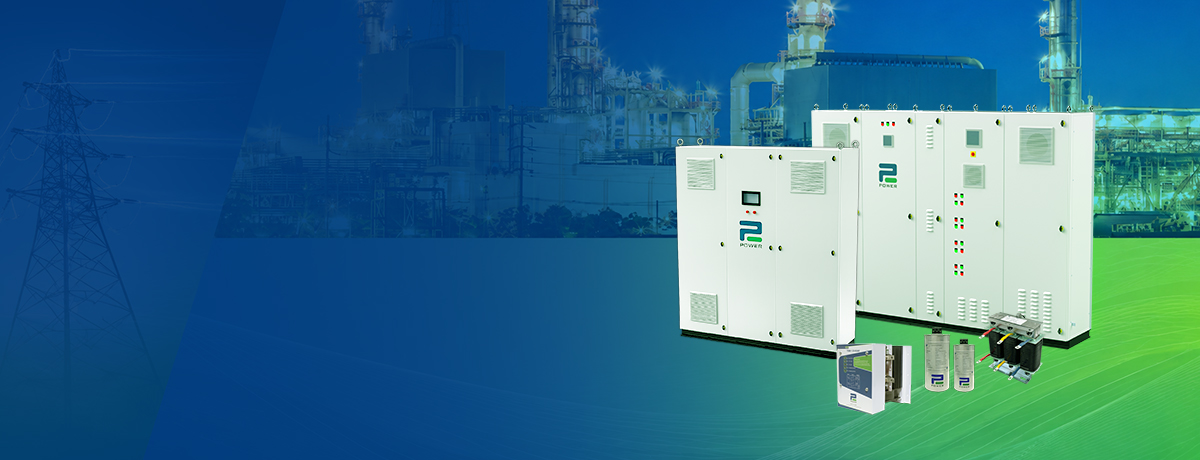
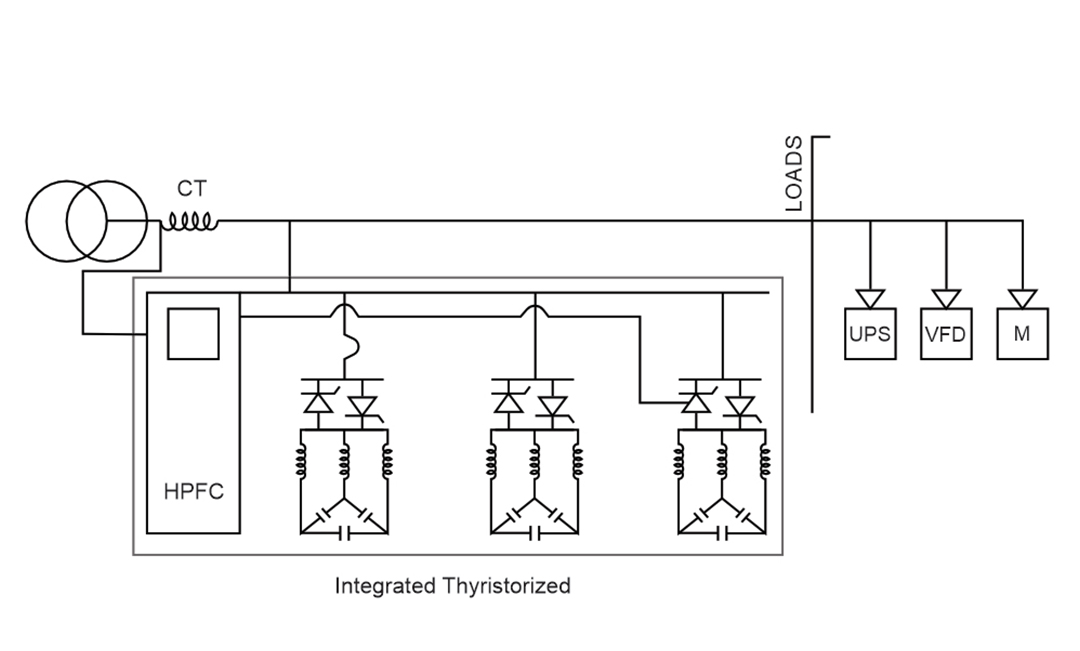
P2 Power Smart Hybrid Power Factor Correction (HPFC) combines the advantages of conventional capacitor-based
reactive power compensation with the fast dynamic response of a Static Var Generator (SVG).
The system integrates Thyristor Switched Capacitors (TSC) with an SVG to provide an efficient solution for
installations where reactive power demand varies significantly. The capacitor stages handle larger portions
of the reactive power requirement in defined steps, while the SVG continuously manages smaller and rapidly
changing reactive power variations.
This hybrid approach minimizes unnecessary capacitor switching while providing smooth and responsive
compensation. It offers an effective balance between performance, reliability, system capacity, and overall
investment cost.
The HPFC system can also provide harmonic compensation and load-balancing functions through the SVG, making
it suitable for industrial facilities with fluctuating and non-linear loads.
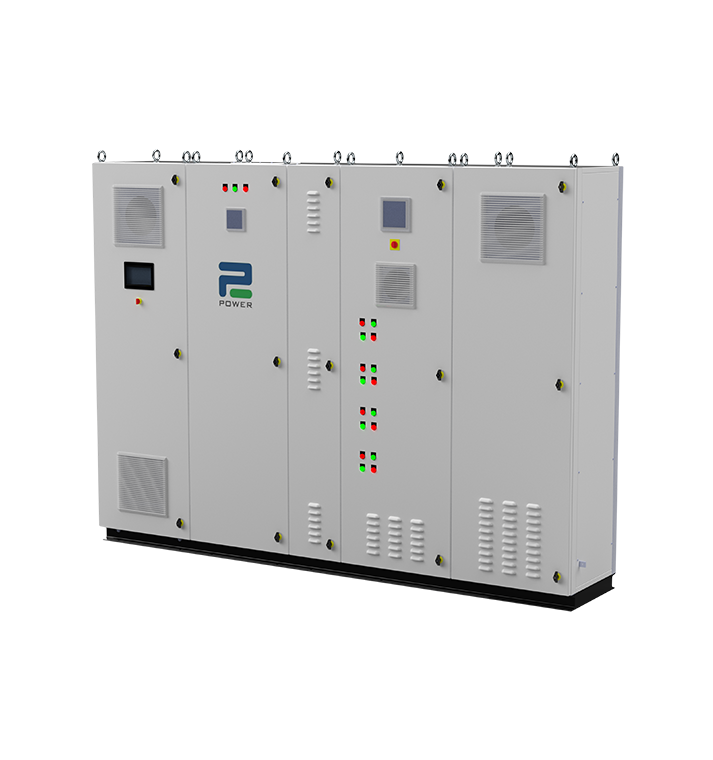
Integrated with capacitors, reactors, thyristor, contactor, and apfc relay to provide comprehensive reactive
power management.
How it works?
How Smart Hybrid HPFC Works
The hybrid system consists primarily of two compensation sections:
Thyristor Switched Capacitor (TSC)
The TSC section uses multiple capacitor stages that can be switched electronically according to the reactive
power demand of the electrical system.
It is primarily responsible for handling larger and relatively stable reactive power requirements, reducing
the amount of continuous compensation required from the SVG.
Static Var Generator (SVG)
The SVG provides fast, continuous, and precise reactive power compensation. It responds to rapid changes in
load demand and
supplies the required leading or lagging reactive current without conventional mechanical switching.
The SVG can also contribute to:
-
Harmonic current compensation
- Three-phase load balancing
- Neutral current reduction
- Dynamic power factor correction
By coordinating both technologies through intelligent control, the HPFC system delivers smooth compensation
while reducing unnecessary switching operations.
Smart Hybrid Compensation
Electrical loads in modern industrial facilities can change rapidly, causing significant variations in
reactive power demand. Conventional capacitor banks may not respond quickly enough to these fluctuations and
can result in over-compensation or repeated switching.
P2 Power's Smart HPFC continuously evaluates system conditions and determines the appropriate combination of
capacitor stages and SVG compensation.
The control strategy enables:
-
Automatic capacitor stage management
- Fast response to dynamic loads
- Smooth reactive power compensation
- Reduced unnecessary capacitor switching
- Improved equipment operating life
- Stable power factor under changing load conditions
This coordinated operation makes the HPFC particularly suitable for facilities where load characteristics
change frequently.
Modular SVG Design
The SVG section of the P2 Power Smart HPFC uses a modular architecture for convenient installation,
maintenance, and capacity expansion.
The system can be configured with one or multiple SVG modules according to the required compensation capacity.
Additional modules can be incorporated when the facility's power quality requirements increase.
Available Installation Configurations
-
Rack-mounted modular SVG
-
Wall-mounted SVG
-
Floor-standing SVG
A touch-screen Human Machine Interface (HMI) can be provided for system monitoring, configuration, and
diagnostics.
Key Features
Cost-Optimized Hybrid Architecture –
Combines TSC and SVG technologies for efficient
power compensation
Advanced Harmonic Compensation –
Detects and selectively compensates unwanted
harmonics
Dynamic Power Factor Correction –
Maintains power factor close to the desired set
point
Rapid Response to Load Changes –
Responds quickly to fluctuating and dynamic
loads
Three-Phase Load Balancing –
Corrects phase imbalance for improved system
stability
Neutral Current Reduction –
Helps reduce neutral current through zerosequence compensation
High-Performance Harmonic Filtering –
Provides effective filtering of harmonic components
Real-Time Electrical Monitoring –
Monitors key electrical parameters and system
performance
Voltage & Current Waveform Visualization –
Enables real-time waveform analysis
Touchscreen HMI & Intelligent Control –
Provides intuitive monitoring, control, alarms, and
system status
Comprehensive Protection –
Includes over-voltage, under-voltage, over-current,
overload, and over-temperature protection
Reliable Industrial Operation –
Designed for continuous and stable operation in
demanding industrial environments
Smart Control & Communication
The P2 Power Smart HPFC can incorporate advanced digital control technology for accurate measurement, fast
compensation, and coordinated operation between the TSC and SVG sections.
Depending on the selected configuration, available functions may include:
-
Digital signal processing-based control
-
Synchronous reference-frame control
-
Fast reactive power compensation
-
Selective harmonic compensation
-
Negative-sequence compensation
-
Zero-sequence compensation
-
Automatic overload management
-
Adjustable compensation priorities
-
Local touchscreen monitoring
-
Ethernet-based remote monitoring
-
MODBUS RTU communication
-
USB/SD-based data management
-
Internal communication between system modules
-
Closed-loop and open-loop operating modes
-
Operator activity and event logging
Advantages of Smart Hybrid HPFC
The P2 Power Smart HPFC provides a combination of high-capacity reactive power compensation and fast dynamic
correction in one integrated system.
Major Benefits
-
Rapid response to changing load conditions
-
Continuous and smooth reactive power compensation
-
Improved power factor
-
Reduced reactive power demand from the grid
-
Better utilization of existing electrical infrastructure
-
Reduced unnecessary capacitor switching
-
Improved capacitor-system reliability
-
Harmonic mitigation capability
-
Three-phase load balancing
-
Neutral current reduction
-
Modular and scalable architecture
-
Lower operating losses
-
Simplified monitoring and maintenance
-
Flexible configuration based on site requirements
Technical Configuration
The P2 Power Smart Hybrid Power Factor Correction system is available in different configurations and ratings
to accommodate various industrial and commercial applications.
Its modular architecture allows the TSC and SVG sections to be selected and combined according to:
-
Site reactive power demand
-
Load fluctuation characteristics
-
Harmonic distortion levels
-
Required power factor
-
Available installation space
-
Required compensation capacity
- Project-specific power quality requirements
The use of modern power-electronic topology and intelligent control enables the system to achieve an
effective balance between dynamic performance, energy efficiency, reliability, and installation cost.
Customer Benefits
By combining TSC-based bulk reactive power compensation with fast SVG control, the P2 Power Smart HPFC can
provide several operational advantages:
-
Improved electrical power factor
-
Reduced reactive power demand
-
etter utilization of available transformer and distribution capacity
-
Improved power quality
-
Reduced electrical losses
-
More stable operation of industrial equipment
-
Reduced stress on compensation equipment
-
Lower maintenance requirements
-
Scalable capacity for future expansion
-
Improved overall efficiency of the electrical distribution system
Applications
Smart Hybrid HPFC is particularly suitable for facilities where reactive power demand
varies rapidly or where conventional capacitor-based correction alone is insufficient.

Automotive & Auto Ancillary
- Modern automotive manufacturing facilities use welding systems
- CNC equipment
- Robotic production lines and other automated machinery
- These loads can produce rapidly changing reactive power requirements and harmonic distortion.

IT/ITES & Data Centers
- Uninterruptible Power Supply (UPS) systems
- Precision HVAC & cooling chillers
- Server rack power distribution units (PDUs)
- Backup generator synchronization systems
- Frequency converter systems

Steel & Rolling Mills
- Rolling mills and steel-processing facilities often operate large motors and rapidly varying
industrial loads.

Food & Beverage Industry
- Industrial refrigeration & chillers
- High-speed bottling & canning lines
- Industrial mixers & blenders
- Conveyor & sorting drives
- Clean-in-Place (CIP) pumping systems

Paper & Pulp Industry
- Wood chippers & debarking drums
- Pulp refiners & digester drives
- Paper machine drive rolls & calenders
- Chemical recovery boilers
- Effluent treatment pumping systems

Water & Wastewater Treatment Plants
- High-capacity raw water pumps
- Aeration blowers & compressors
- Sludge dewatering centrifuges
- Chemical dosing & mixing equipment
- UV disinfection & filtration systems
Typical requirements include:
-
High-capacity reactive compensation
- Fast response to load changes
- Power factor improvement
-
Harmonic mitigation
-
Voltage and current stability
HVAC & Chiller Systems
Large HVAC installations and centralized chiller plants can experience significant variations in reactive
power demand due to compressor and motor operation.
HPFC can dynamically compensate changing reactive power requirements while maintaining the desired power
factor.
Heavy Process Industries
Suitable for facilities with large motors, drives, pumps, compressors, and other variable industrial loads.
Metals & Minerals
Mining, mineral processing, crushing, grinding, and material-handling equipment can generate substantial and
fluctuating reactive power demand.
VFD-Intensive Facilities
Facilities with a high concentration of Variable Frequency Drives (VFDs) can benefit from the combination of
reactive power correction and SVG-based power quality compensation.