
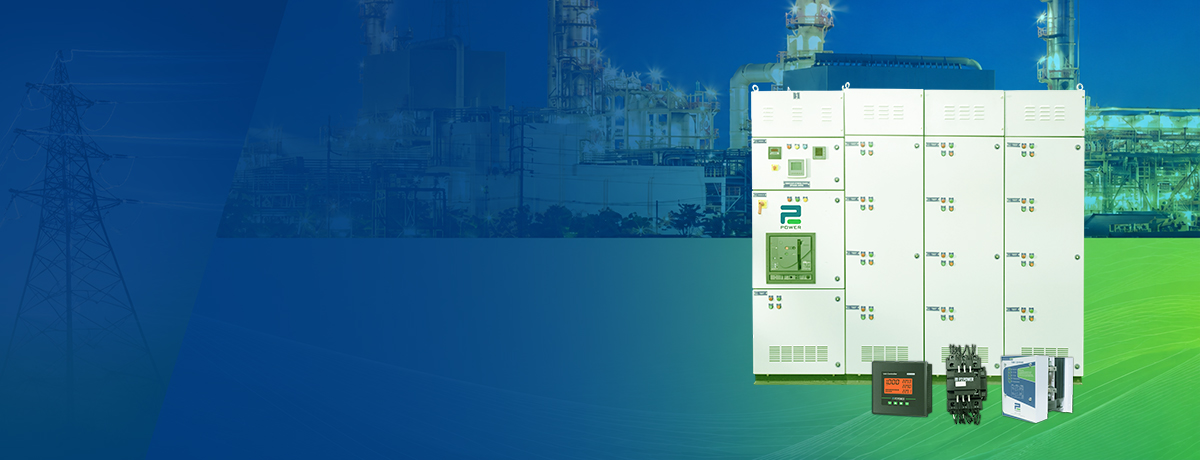
P2 Power Automatic Power Factor Correction (APFC/RTPFC) Panels are engineered for low-voltage power distribution systems that require dependable and automatic reactive power management. The panels continuously evaluate the electrical load and connect or disconnect capacitor stages according to the instantaneous reactive power requirement.
This automatic compensation helps maintain the target power factor across changing operating conditions, while improving the utilization of electrical infrastructure and reducing the impact of reactive power on the distribution network.
The panels are built using application-oriented power-quality components and can be configured for different industrial and commercial installations.
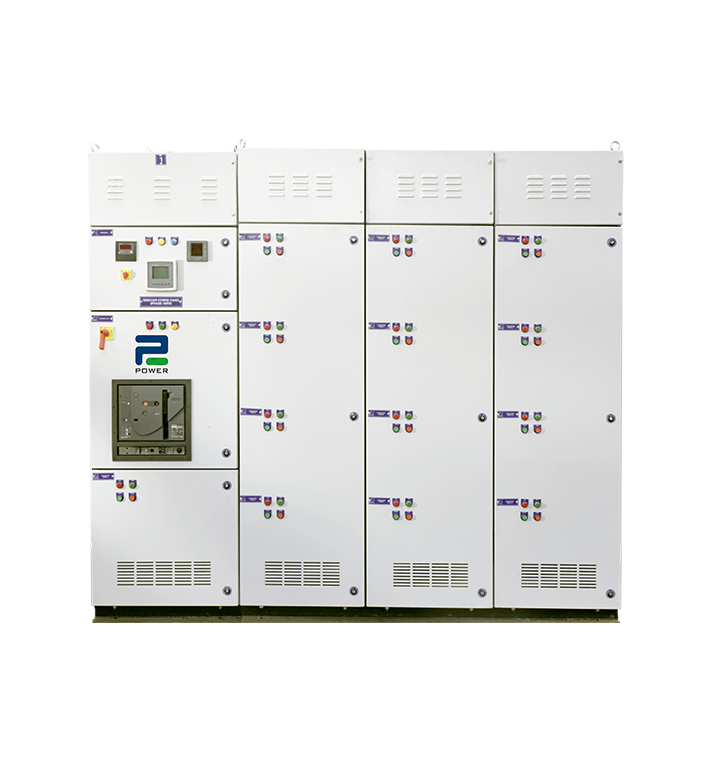
Integrated with capacitors, reactors, thyristor, contactor, and apfc relay to provide comprehensive reactive power management.
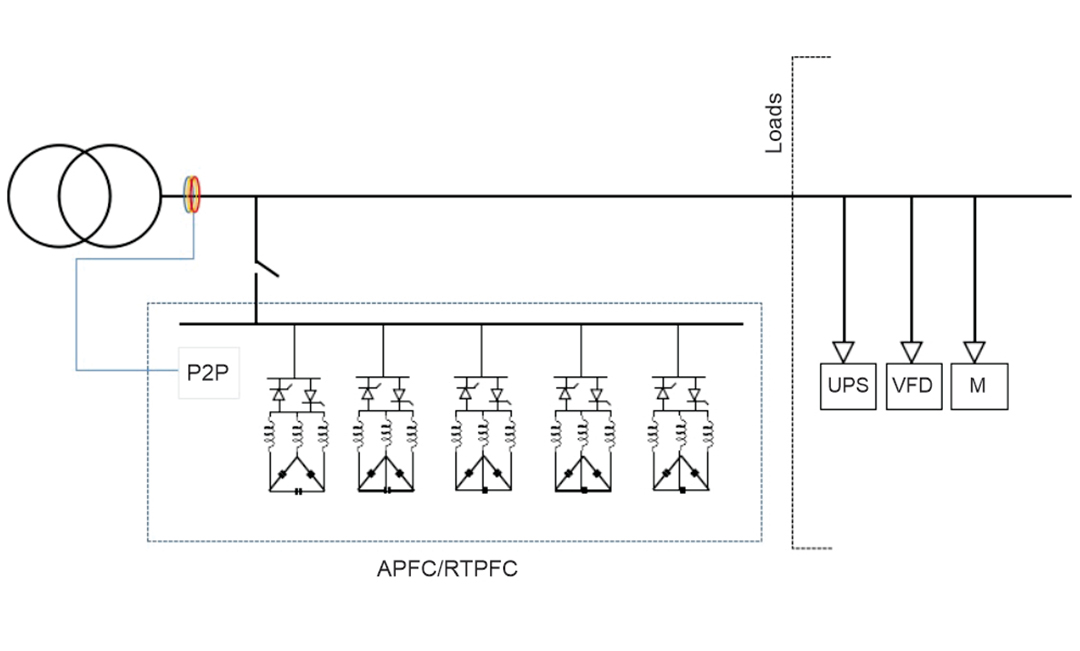
Intelligent Reactive Power Management
The APFC/RTPFC controller continuously monitors the electrical parameters and determines how much reactive compensation is required. Capacitor stages are then switched according to the measured load demand to maintain the programmed power factor.
Three-Phase Load Measurement
A 3-CT sensing arrangement enables the controller to monitor current on all three phases. This provides a more comprehensive measurement of the electrical system and supports accurate capacitor- stage control.
Heavy-Duty Capacitor Selection
P2 Power APFC panels can be configured with Heavy-Duty and Super-Heavy-Duty oil-impregnated power capacitors for applications where reliable performance and extended service life are important.
Flexible Switching Technology
Depending on the load profile and required switching speed, the system can be configured with conventional capacitor-duty contactors or electronic/thyristor switching technology.
Thermal Management
Forced-air ventilation can be incorporated according to the panel rating. Thermostats and cooling fans operate as required to manage internal temperature and support dependable operation.
Harmonic-Aware Configuration
Where significant harmonic distortion is present, detuned reactors can be incorporated with the capacitor stages. Proper reactor selection helps reduce the possibility of capacitor-resonance conditions and supports safer operation in harmonic-rich networks.
Monitoring & Communication
Improved Power Factor
Automatic reactive power compensation helps keep the operating power factor near the configured target. This can help reduce applicable power-factor penalties and support eligibility for utility incentives where available.
Reduced Apparent Power Demand
Improving power factor can reduce the current required for the same useful power output and may help lower kVA demand charges, depending on the applicable electricity tariff.
Better Utilization of Electrical Infrastructure
Lower reactive current can free up usable capacity in equipment such as:
Reduced Electrical Losses
By reducing unnecessary reactive current, APFC can help lower I2R losses in distribution conductors and associated equipment, subject to system conditions.
Controlled Capacitor Switching
The controller connects only the compensation stages required by the prevailing load, helping avoid unnecessary capacitor operation during light-load or low-demand conditions.
Reduced Risk of Over-Compensation
Intelligent stage control helps prevent excessive capacitive compensation during periods of low electrical demand, such as plant shutdowns, shift changes, breaks, or reduced production.
Extended Capacitor Life
Appropriate switching control and properly selected detuned reactors can reduce operating stress on capacitor banks and help improve their service life.
Rapid Compensation for Dynamic Loads
For installations with frequently changing reactive power demand, fast electronic switching can provide significantly quicker compensation than conventional mechanical switching arrangements.
Zero-Crossing Switching Option
Where thyristor-based switching is selected, zero-current-crossing switching technology can be used to control capacitor connection and reduce switching transients.
Improved Voltage Performance
Reducing excessive reactive current can help reduce voltage drops across the distribution network and contribute to improved voltage stability, depending on the characteristics of the electrical system.
Generator-Compatible Applications
APFC solutions can be engineered for generator-fed systems where appropriate. Improved reactive power management can help optimize the utilization of available generator capacity, subject to generator manufacturer limits and system design.
Suitable for High-Power & Fluctuating Loads
The system can be configured for applications involving large motors, pumps, compressors, HVAC systems, manufacturing machinery, and other loads with significant or variable reactive power requirements.
High Power Factor Capability
With adequate compensation capacity and proper system configuration, P2 Power APFC/RTPFC systems can be designed to achieve a power factor of 0.99 or higher under specified operating conditions.
APFC with Thyristor Switching
For applications requiring frequent and rapid capacitor-stage operation, thyristor- switched APFC can be selected instead of conventional contactor-based switching.
This configuration provides:
This makes thyristor-based compensation particularly useful where conventional contactor switching may not provide the required response speed.

Typical Loads

Typical Loads

Typical Loads

Typical Loads

Typical Loads

Typical Loads


