

P2 Power Shunt Reactors are designed for reactive power management and voltage regulation in electrical power networks. They provide controlled inductive compensation by absorbing excess capacitive reactive power generated by transmission and distribution systems.
Shunt reactors are particularly valuable in networks where long transmission lines, underground cables, or lightly loaded circuits can produce significant capacitive reactive power. By absorbing this excess reactive power, the reactor helps control voltage rise and supports stable operation of the electrical network.
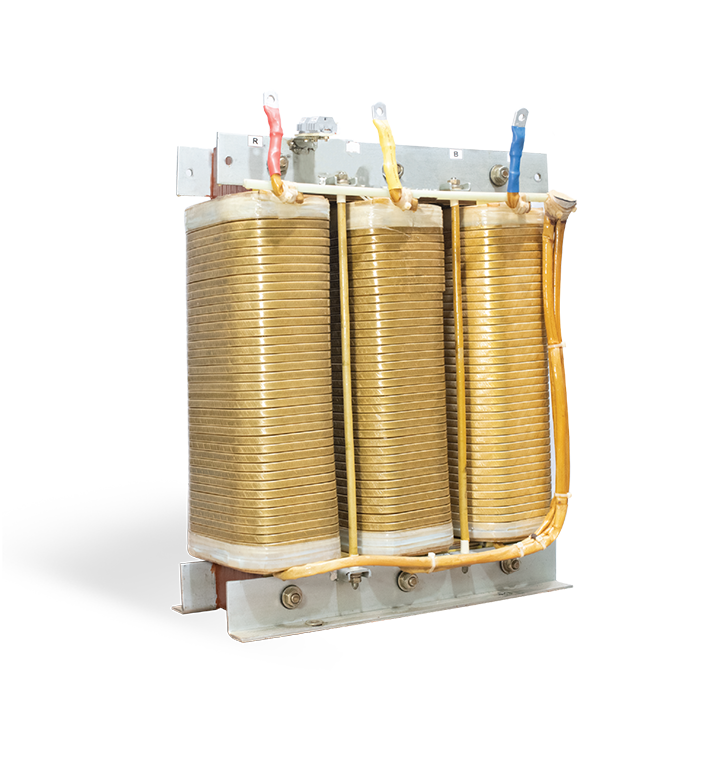
| Reference Standards | IS-5553(Part 1-8) / IEC 60076-6 |
| Linearity | 135% |
| Tolerance on Inductance | ±5% |
| Rated Voltage | 440V |
| Insulation Class | H (180 °C) |
| Temperature Rise | < 110 °C |
| Rated Frequency | 50 Hz |
| Ambient Temperature | 50 °C Max. |
| Temperature Protection | 150 °C Thermal Cutout |
| Dielectric Strength | 3 kV |
| Lamination / Core | CRNO / CRGO (as required) |
| Winding Material | Aluminium / Copper (as required) |
| Connection | Parallel to line |
| Cooling Method | Forced Air |
Transmission Systems
Shunt reactors are commonly used in transmission networks to compensate for the capacitive reactive power associated with long transmission lines and help control voltage during lightly loaded conditions.
High-Voltage Networks
They can be installed at selected points in high-voltage networks to provide controlled reactive power absorption and support voltage management.
Long Transmission Lines
The capacitive characteristics of long overhead transmission lines can become significant as line length increases. Shunt reactors help counteract this effect by absorbing reactive power.
Underground Cable Networks
Long underground and submarine cable systems can have substantial capacitance. Shunt reactors can be used to compensate for the resulting capacitive reactive power.
Renewable Energy & Grid Infrastructure
Shunt reactors can be incorporated into grid infrastructure associated with renewable-energy installations where reactive power and voltage conditions need to be managed.
Industrial Power Systems
Large industrial networks with substantial capacitive behavior or specific voltage-control requirements may also utilize shunt reactors as part of their reactive power management strategy.